Molecular Spintronics and Magnetism Laboratory
Our research topics

Hybrid Molecular Interfaces for Spintronics
Hybridization at the interface between molecular materials and ferromagnetic metals significantly alters the properties of both layers, enhancing spin polarization near the Fermi level and modifying magnetic anisotropy. These interfaces, known as spinterfaces, exhibit unique spin functionalities and enable spin re-orientation transitions and the emergence of spin-polarized states in molecular systems. As key components in spintronic devices, spinterfaces offer powerful tools for engineering device performance at the molecular level.
Unconventional Computing and Quantum Sensing
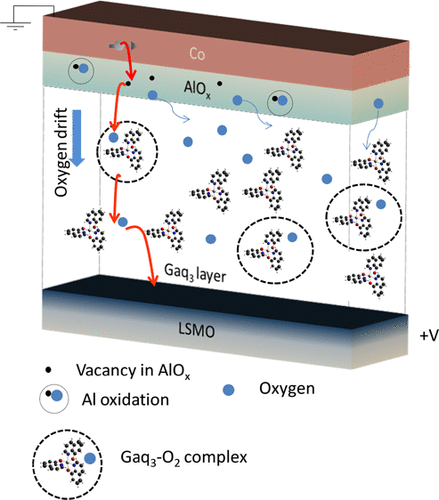
The rich physics of molecular spintronic devices offers several unique ways to answer some of the most pressing demands for future technologies. In our laboratory we study how their magneto and resistive switching properties can be used to develop new neuromorphic computing paradigms, and how the molecular spin can be employed as an exquisitely sensitive magnetic field quantum sensing tool.
Magnetic technologies for biomedical applications
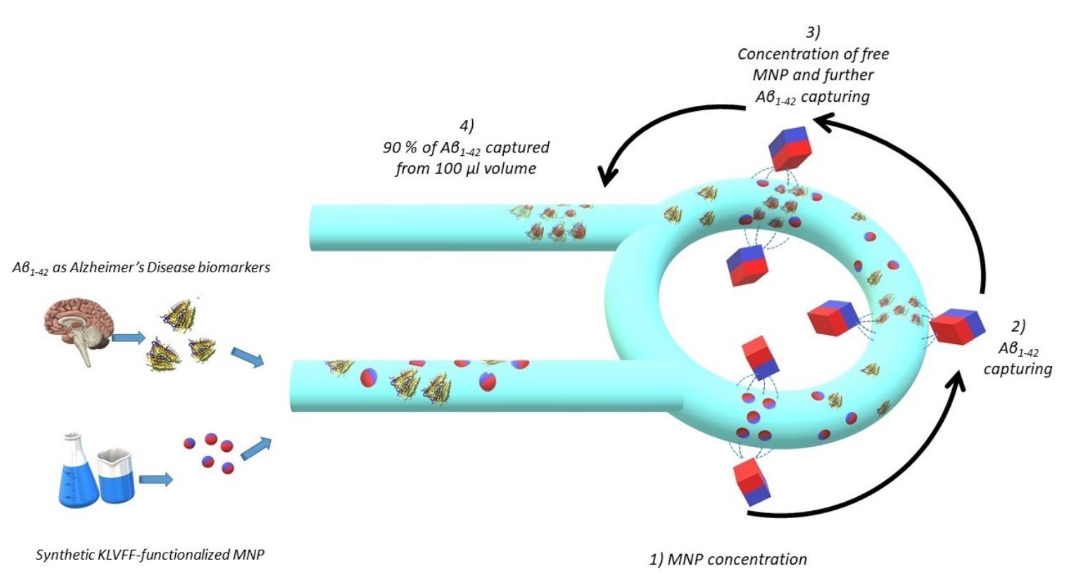
Magnetic nanoparticles (MNPs) are widely used in biomedical applications such as cancer hyperthermia, targeted drug delivery, and tissue engineering, including cell manipulation and stem cell differentiation. They enable precise control of biological agents by functionalizing their surfaces and guiding them with external magnetic fields, both in vivo and in vitro.

Charge Transport Simulation in Electronic Materials
We study the charge transport in materials with environment-oriented applications. We couple DFT electronic structure calculations with semiclassical Boltzmann transport to describe the full energy, band index, and momentum dependence of the carrier relaxation times.